


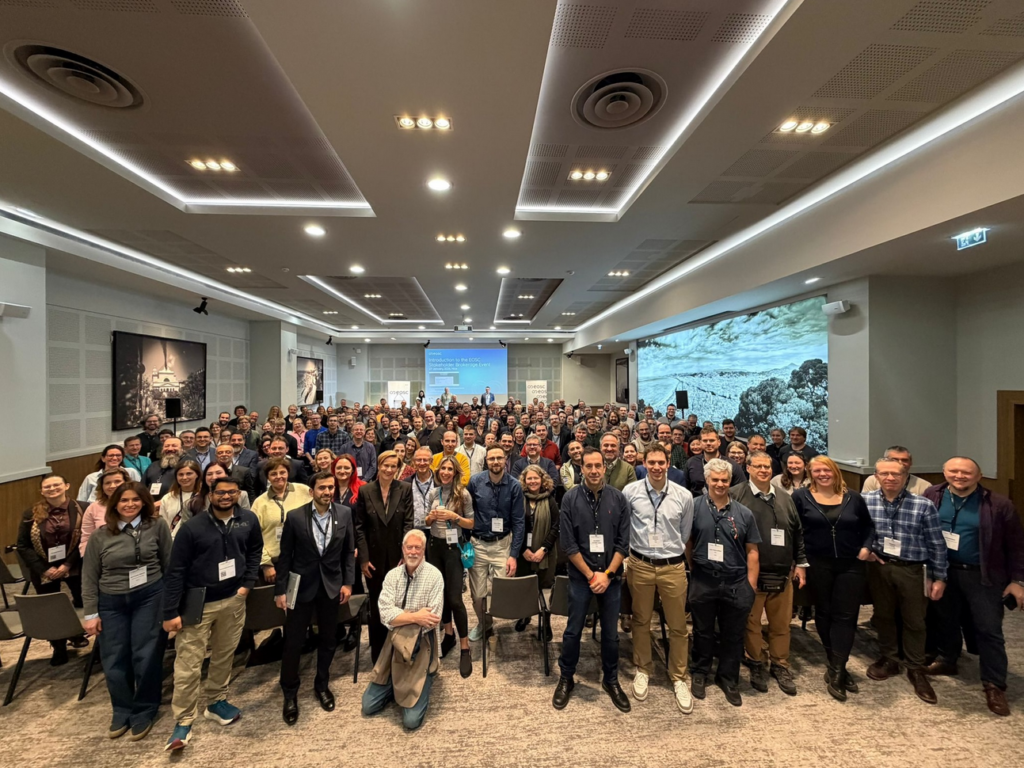
EXTRACT partner, Observatoire de Paris, shared TASKA results to attendees of the third edition of the EOSC Winter School, held in Nice, France from 27–29 January 2026. Organized by the European Open Science Cloud (EOSC) Association with support from the EOSC Gravity project, the event brought together stakeholders from across the EOSC community and EOSC Nodes to advance collaboration, explore funding opportunities, and strengthen convergence within the EOSC Federation.
Baptiste Cecconi presented EXTRACT and the Transient Astrophysics with a Square Kilometre Array pathfinder (TASKA) -C use case during the “Resources” thematic track. Specifically, he showed the distributed workflow orchestrator for radio astronomy data processing.
TASKA has been deployed and tested on Kubernetes clusters at OVH, EGI, EOSC EU Node, and Observatoire de Paris, with BRGM scheduled next. Ongoing developments include automated workflow execution, HPC integration via Slurm, integration of data catalogs, provenance management, and automated data staging and cleanup. The presentation highlighted interactive workflows on the EOSC-EU Node Notebook service and automated workflows on the EOSC-EU Node Cloud Container Platform, illustrating the platform’s readiness for EOSC Node deployments. Presentation slide can be found here.
While TASKA-C was the main focus of the presentation, EXTRACT also supports other use cases that showcase the platform’s versatility, including TASKA-A (agile detection of solar activity and decision-making for the reduction of raw data) and the Personalized Evacuation Route (PER) in Venice (uses an urban digital twin and AI engine for real-time evacuation modeling).
The Winter School fostered convergence across the EOSC Federation by connecting EOSC Nodes with the wider community, providing networking opportunities to build partnerships and funding collaborations, and promoting hands-on, in-depth engagement among participants. EXTRACT’s participation demonstrated not only TASKA’s capability for distributed data computing in astronomy but also the platform’s adaptability for other data-intensive applications, such as in medical research, security, and resource management.